

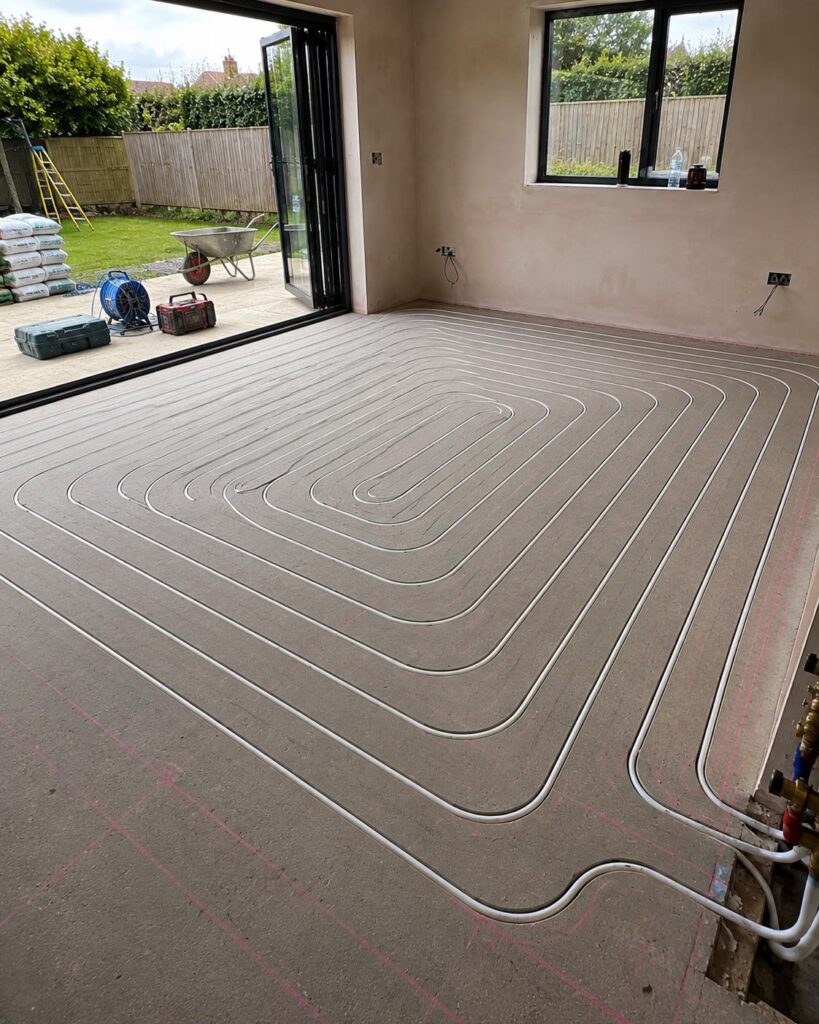
Homeowners in London often want the comfort and efficiency of underfloor heating, but they worry about floor levels, disruption, and the cost of a major renovation. Floor milling solves that problem by making it possible to install modern underfloor heating in existing homes without significantly raising the floor height.
What Is Underfloor Heating Retrofit?
An underfloor heating retrofit is the process of adding a heating system to an existing property rather than only installing it in a new build. In practice, this means adapting the home’s current floors so that heating pipes can be integrated neatly and efficiently. For many properties, especially older homes and refurbished spaces, this is a more practical solution than replacing the entire floor build-up.
Instead of forcing major structural changes, a retrofit focuses on working with the property as it is. That makes it especially appealing for London property renovation projects where time, space, and disruption all matter.
Why Floor Milling Is Ideal for Existing Homes
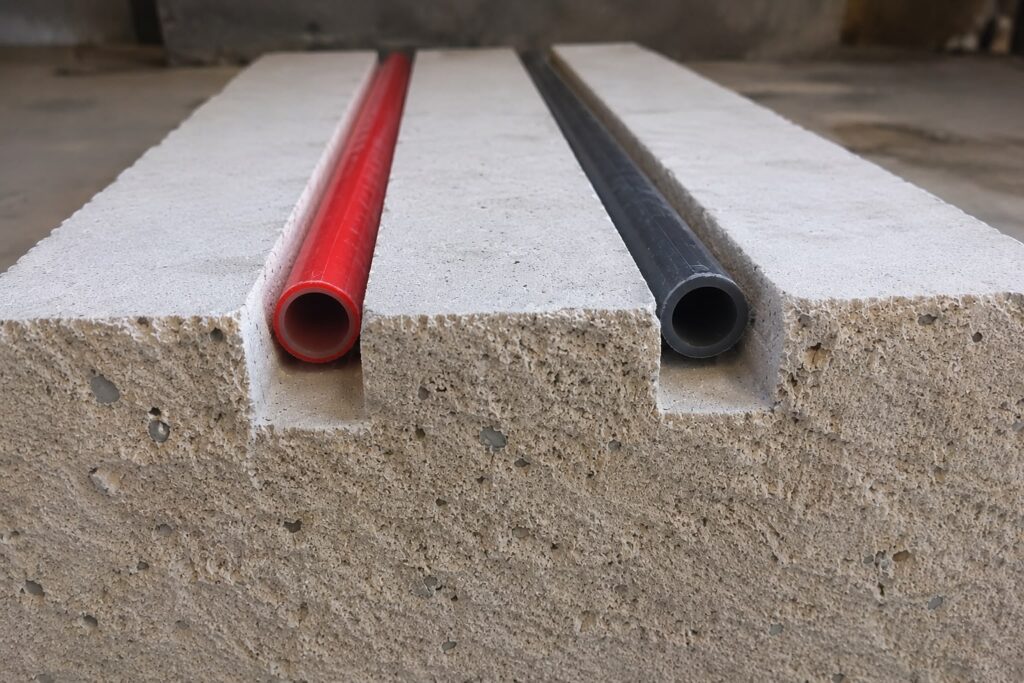
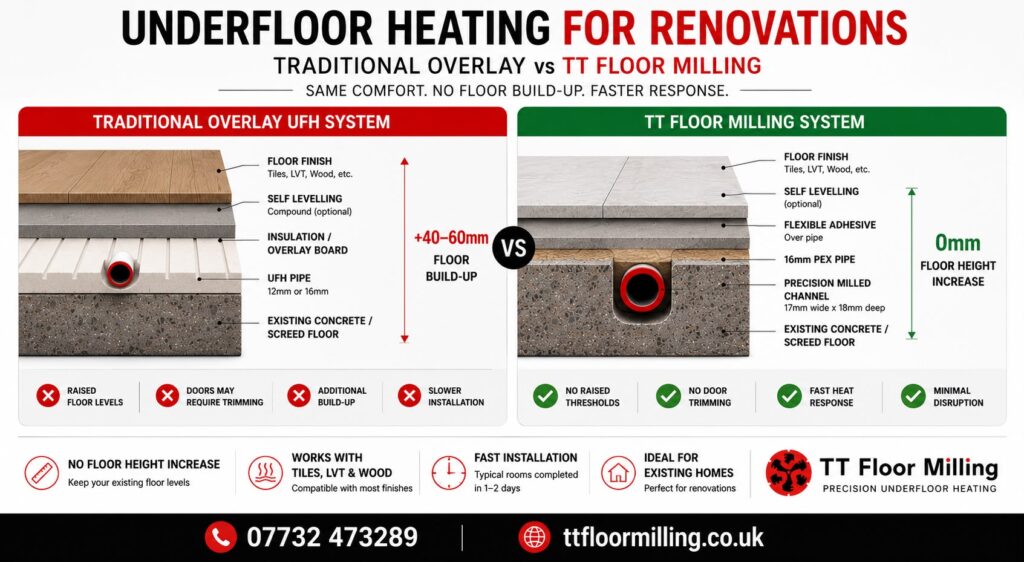
Floor milling is one of the most effective methods for retrofit underfloor heating because it allows precise channels to be cut into the existing floor surface. Those channels are then used to house heating pipes, creating a system that sits within the floor rather than above it. This helps avoid the common issue of raised floor levels, which can create problems with doors, thresholds, skirting, and room proportions.
For existing homes, that is a major advantage. It means the heating upgrade can be integrated with far less visual and practical impact than traditional methods. It also makes floor milling for underfloor heating particularly useful in renovation projects where keeping the original layout matters.
How the Floor Milling Process Works
The process starts with assessing the condition and type of floor. Concrete, screed, timber, and tiled surfaces all need to be evaluated carefully before any work begins. Once the floor is confirmed as suitable, specialist milling equipment is used to cut narrow channels into the surface at precise depths and spacing.
Those channels are then cleaned and prepared for the underfloor heating pipes. After the pipework is installed, the floor is made ready for the final surface finish. The result is a heating system that sits efficiently within the structure of the floor and distributes heat evenly across the room.
Because the milling is controlled and targeted, the installation can usually be completed with less mess and less disruption than more invasive renovation methods. For homeowners planning an energy-efficient heating upgrade, that difference matters.
Key Benefits of Retrofitting Without Raising Floors
One of the biggest benefits of underfloor heating retrofit is that it preserves floor height. This avoids the need to adjust doors, stairs, kitchen units, and transitions between rooms. In many homes, especially those with existing finishes or multiple floor levels, that can save significant time and additional work.
Another major benefit is improved comfort. Underfloor heating delivers heat more evenly than many traditional radiator systems, reducing cold spots and creating a more consistent indoor temperature. It can also support lower running temperatures, which is why many people consider it a smart long-term energy-efficient heating solution.
There is also the lifestyle benefit of reduced visual clutter. With no radiators taking up wall space, rooms can feel cleaner, more open, and easier to design around. That is especially attractive in modern interiors where layout flexibility matters.
Which Properties Are Best Suited?
Floor milling and retrofit underfloor heating work well in a wide range of properties, but they are particularly useful in homes where preserving the existing structure is important. Period homes, renovated flats, terraced houses, and refurbished commercial spaces can all benefit from this approach. It is also a strong option for rooms that are being upgraded one area at a time rather than through a full property overhaul.
Homes with concrete or screed floors are often especially suitable, but timber and tiled surfaces may also be appropriate depending on the project. The key is proper assessment at the beginning, because the success of the installation depends on matching the method to the floor type and the building’s needs.
For many homeowners, this makes the solution ideal for heating renovation work where practicality and performance need to sit side by side.
Why Work With a Specialist Installer
A successful underfloor heating installation depends on more than just the equipment. It requires experience, planning, and careful execution from start to finish. A specialist installer understands how to assess floor conditions, plan channel layouts, protect the structure of the property, and ensure the heating system performs properly over time.
That is especially important in existing homes, where every property is different. Older buildings may have uneven surfaces, mixed materials, or previous alterations that affect how the work should be carried out. A specialist can adapt the approach to suit the building rather than forcing a one-size-fits-all solution.
TT Floor Milling’s full-service approach is valuable here because it covers preparation, milling, installation, and completion as one coordinated process. That helps reduce delays, improves consistency, and gives property owners more confidence in the final result.
Comfort, Efficiency, and Long-Term Value
The appeal of floor milling goes beyond installation convenience. It is also about long-term value. A well-designed retrofit underfloor heating system can improve day-to-day comfort while supporting better energy performance across the property. That is important in a city like London, where homeowners are increasingly looking for upgrades that combine practicality with efficiency.
Because the heat is spread more evenly across the floor, the system can make a room feel warmer and more comfortable even at lower settings. Over time, that may help reduce energy use compared with older heating arrangements. For property owners thinking not just about comfort but also about future value, that makes the investment easier to justify.
Conclusion
Underfloor heating retrofit is one of the smartest ways to modernise an existing home without compromising the original floor level. With floor milling, it becomes possible to integrate a high-performance heating system neatly into the property, with minimal disruption and a clean finish. For homeowners planning a London property renovation, it offers a practical balance of comfort, efficiency, and long-term value.